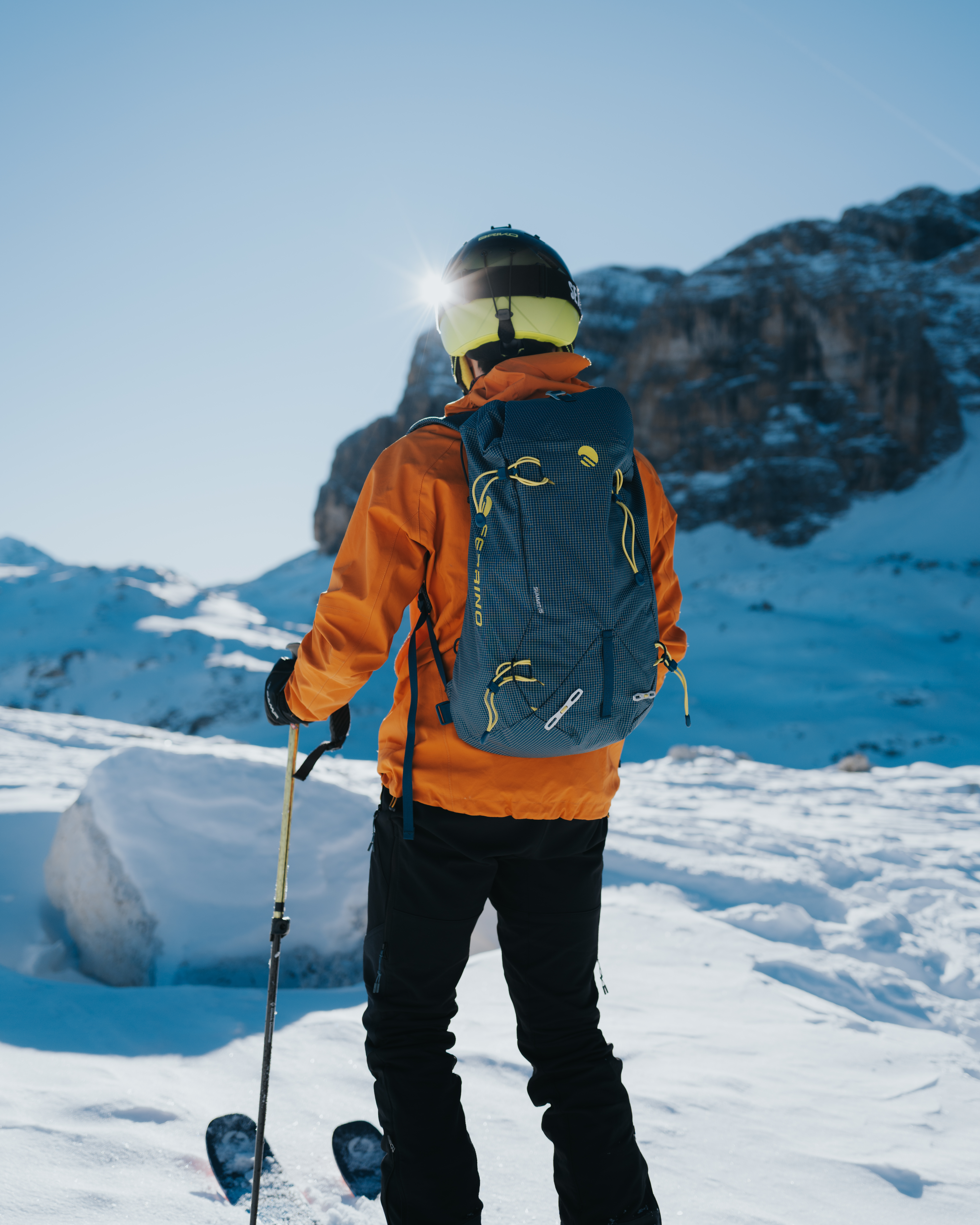
Going skiing on a Ciao moped

Two brothers, 2.8 horses and the Dolomite passes

There will be a day when Italy will no longer hear the roar of a Ciao moped's 1.4 horsepower engine.
But this is not the day.

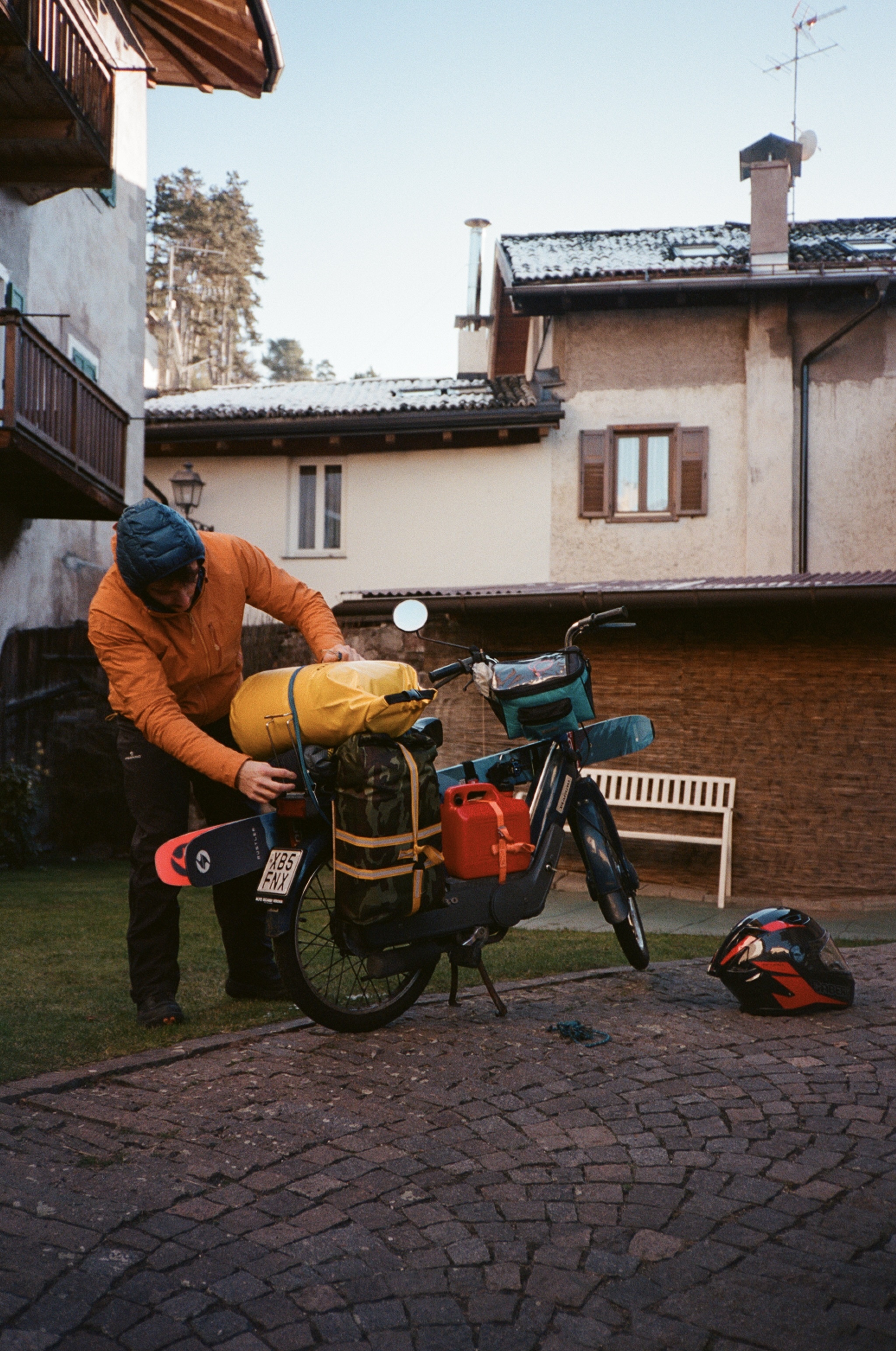
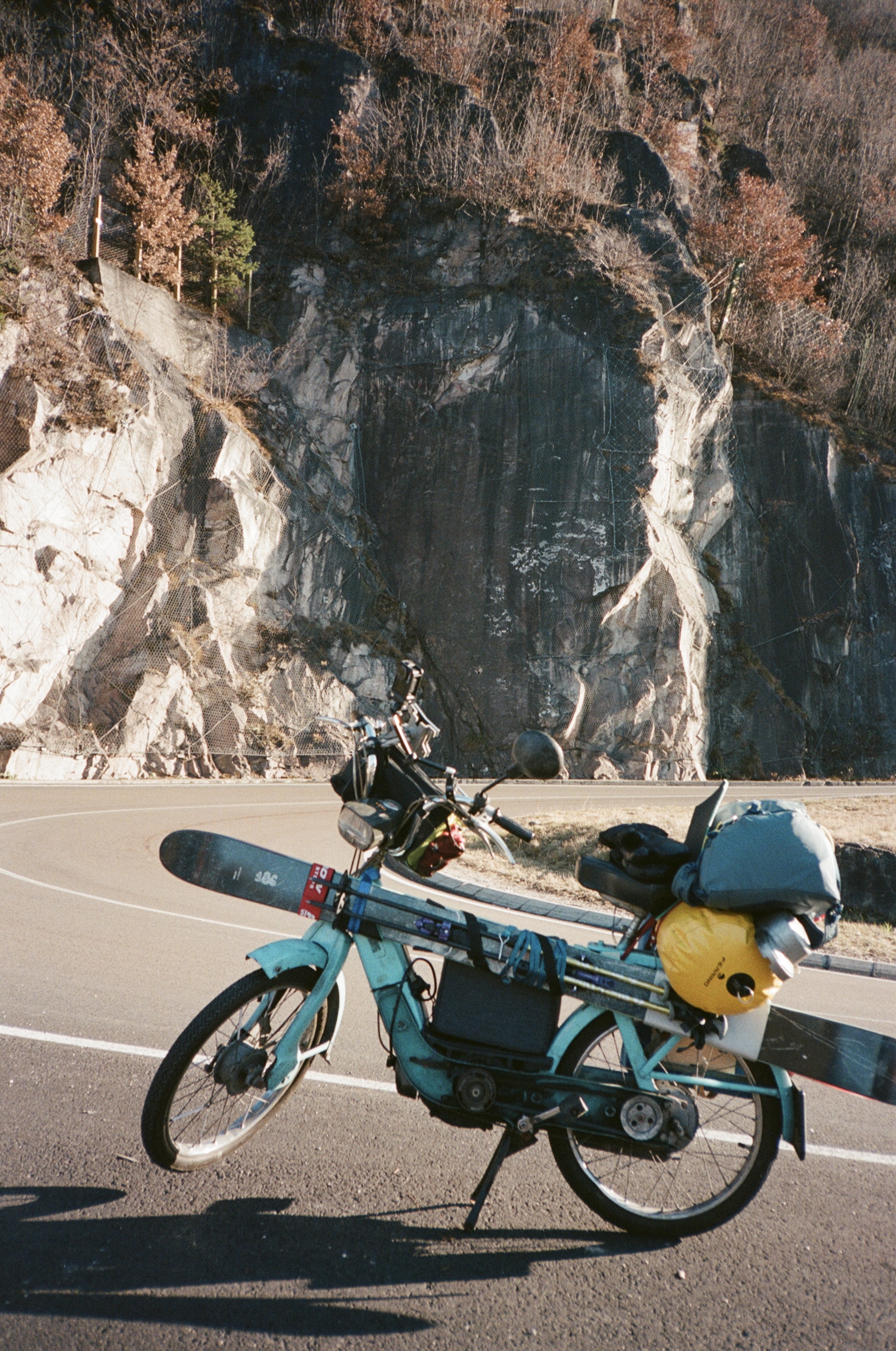
After last year's epic first edition, Marco Brentegani and Matteo Brentegani are back in the saddle for the second edition of "Andare a sciare in Ciao": a journey to Val Badia, crossing Cavalese, Predazzo, Passo Sella, and Passo Gardena. The vehicles remained faithful to the original spirit, but after last year's experience, they were slightly adjusted at the most critical points along the route.

We caught up with them on their way back to tell them how it went.


Let's start from the beginning: why go skiing on Ciao moped?

Because it's the most complicated way possible to do something so simple. Leaving Verona and reaching the Dolomites on two Ciaos means accepting uncertainty as part of the journey. Arrival isn't guaranteed, mechanics are essential, the altitude is unforgiving. And that's precisely the beauty of it.


How did the departure go?

Better than last year. The Adige Valley went smoothly, thanks to the favorable weather. One hundred and thirty kilometers of almost relaxing flatland, an extra tank of gas to keep you calm over long distances, and that dangerous feeling that makes you think, "Maybe this year will be easier."

Then came the Cavalese climb, the first real challenge. Against all expectations, it was overcome with steadfastness, so much so that we arrived in time to enjoy the sunset. But it was only the beginning.

When did you realize the mountain would come crashing down?

On the Sella Pass. Around 1800 meters, one of the Ciaos, the Ammiraglio—an original 1971 pulley—stopped. A problem with the coil, a known weak point. On-site repairs were carried out, the engine was replaced, and the engine restarted.

But revving up doesn't mean downshifting. The altitude had affected the carburetion, power dropped, and even the second Ciao, with its variator, began to struggle. The solution was simple and radical: tie the two bikes together and tow one with the other, pedaling both at full speed. Not elegant, but effective. And enough to reach the pace.
And the night at high altitude?


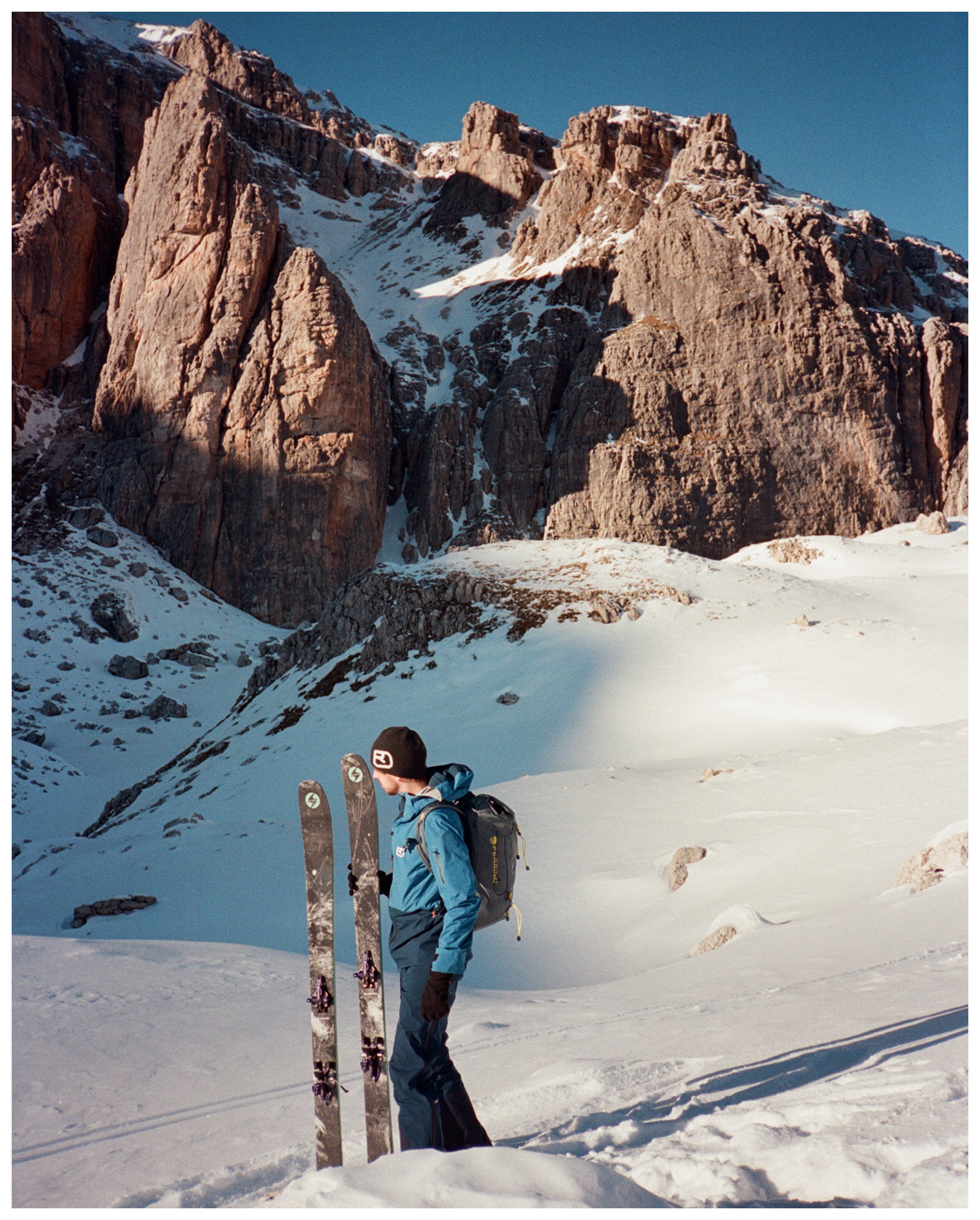
Near a refuge along the pass, with the refuge manager's permission, we set up our tent. Sleeping bags for winter temperatures, thin air, and absolute silence.

The next morning, the tires were almost frozen and the engines were uncooperative. We loaded the vehicles, first attempt. Nothing. Second attempt... the roar arrived. We set off slowly, heading for Passo Gardena.

What was the real difficulty?

Taking a vehicle born for the city out of its natural context. Above a certain altitude, every climb becomes a test: for the mechanics, for patience, for determination. Every problem solved isn't just a breakdown resolved, but becomes part of the adventure.

Why do it a second time?

Because the first one wasn't enough. Because slowing down changes perspective. Because crossing the Dolomite passes at a slow pace forces you to truly experience every inch.

"Going skiing in Ciao" isn't just a technical challenge. It's a different way of thinking about travel: less performance, more experience.